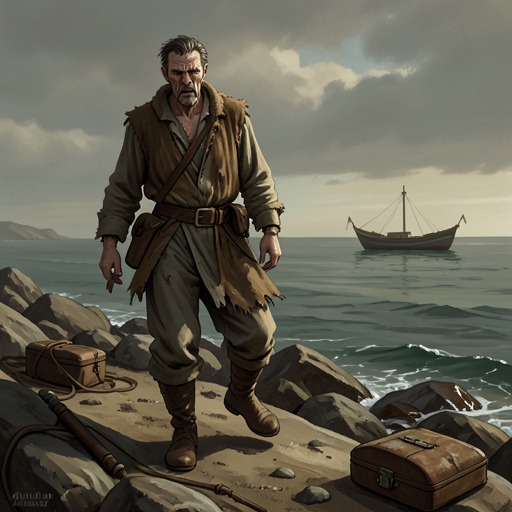
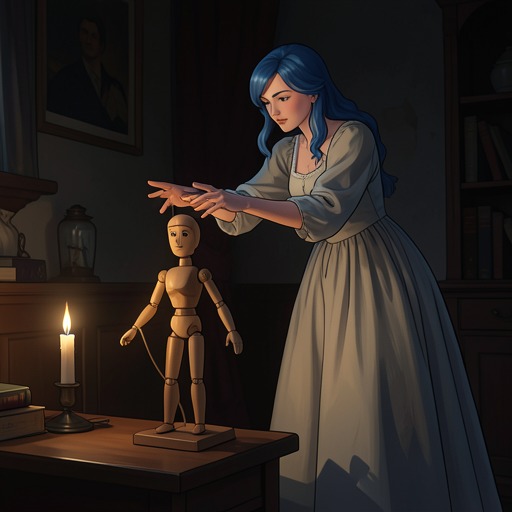
At the opening
The Talking Wood
A piece of ordinary firewood arrives in the workshop of [Maestro Ciliegia](entity:character-recall-character-maestro-ciliegia-e79da2b96064), who plans to turn it into a table leg. Before he can strike it with his axe, the wood cries out in a child's voice and begs him to stop.
Maestro Ciliegia hears the voice again when he works the wood with a plane, and fear overwhelms him. The seemingly lifeless timber has announced the strange, unruly life that will shape the story.
Soon afterward
Geppetto Claims the Wood
[Geppetto](entity:character-recall-character-geppetto-10785dca0792) visits [Maestro Ciliegia](entity:character-recall-character-maestro-ciliegia-e79da2b96064) to ask for a piece of wood so he can carve a remarkable puppet. The wood interrupts them by calling Geppetto by his teasing nickname, provoking an argument between the two old men.
After they make peace, Maestro Ciliegia hands over the animated timber. Geppetto carries it home, intending to make a puppet that can dance and perform tricks.
That day
Pinocchio's Creation
At home, [Geppetto](entity:character-recall-character-geppetto-10785dca0792) carves the puppet and names him [Pinocchio](entity:character-recall-character-pinocchio-0358f4ba4ca8). The new figure's eyes move, his nose grows as soon as it is made, and his mouth laughs and sticks out its tongue at his maker.
Pinocchio steals Geppetto's wig as soon as his hands are finished and kicks him after his feet are carved. Geppetto's creation is already behaving less like a grateful child than an independent troublemaker.
Immediately after his creation
The First Runaway
Once [Geppetto](entity:character-recall-character-geppetto-10785dca0792) sets [Pinocchio](entity:character-recall-character-pinocchio-0358f4ba4ca8) down to teach him to walk, the puppet quickly learns to run. He bolts through the open door and races into the street, forcing Geppetto to chase after him.
A Carabiniere catches Pinocchio by his long nose and returns him to Geppetto. Onlookers misread the situation, however, and their accusations lead the officer to imprison Geppetto while Pinocchio is released.
That evening
The Talking Cricket's Warning
[Pinocchio](entity:character-recall-character-pinocchio-0358f4ba4ca8) reaches home while [Geppetto](entity:character-recall-character-geppetto-10785dca0792) is being taken to prison and encounters the Talking Cricket in his room. The insect warns him that children who rebel against their parents and abandon home will suffer for it.
Pinocchio rejects the warning, declaring that he would rather roam and play than go to school or learn a trade. When the Talking Cricket calls him a wooden-headed puppet, Pinocchio throws a hammer and kills him.
Later that evening
The Painted Supper
Hungry, [Pinocchio](entity:character-recall-character-pinocchio-0358f4ba4ca8) tries to open the painted pot beside the painted fireplace, only to discover that neither can provide food. He searches the house and finds nothing to eat.
He admits to himself that the Talking Cricket was right and wishes [Geppetto](entity:character-recall-character-geppetto-10785dca0792) were there. In the rubbish he finds an egg, but when he cracks it, a lively chick escapes through the window instead of becoming his supper.
During the stormy night
The Burned Feet
In a violent storm, [Pinocchio](entity:character-recall-character-pinocchio-0358f4ba4ca8) goes to the nearby village to beg for bread. A disgruntled old man answers his persistent bell-ringing by dumping a basin of water over him.
Back home, drenched and exhausted, Pinocchio falls asleep with his wooden feet on a brazier. They catch fire and burn away while he sleeps, leaving him unable to stand when morning comes.
The following morning
Geppetto's Return
[Geppetto](entity:character-recall-character-geppetto-10785dca0792) returns from prison and finds [Pinocchio](entity:character-recall-character-pinocchio-0358f4ba4ca8) unable to reach the door because his feet are gone. He climbs in through the window, discovers the burns, and embraces the puppet with grief and affection.
Pinocchio gives a jumbled account of the night, mixing truth with blame and excuses. Geppetto understands that he is starving and gives him the three pears he had saved for his own breakfast.
That morning
The Pears and Their Peels
[Pinocchio](entity:character-recall-character-pinocchio-0358f4ba4ca8) refuses to eat the pears unless [Geppetto](entity:character-recall-character-geppetto-10785dca0792) peels them, and at first rejects the peels and cores as well. Geppetto patiently saves every scrap, insisting that anything may prove useful.
When Pinocchio has eaten the fruit and remains hungry, he finally devours the peels and cores too. His hunger teaches him, through necessity, the value of accepting what is available rather than demanding what he prefers.
After Pinocchio has eaten
New Feet and a Promise
[Pinocchio](entity:character-recall-character-pinocchio-0358f4ba4ca8) begs [Geppetto](entity:character-recall-character-geppetto-10785dca0792) to make him new feet and promises to become good, attend school, and bring comfort to his father. Geppetto delays before giving in, then carves and attaches a new pair while Pinocchio pretends to sleep.
Overjoyed to walk again, Pinocchio vows to go to school. Geppetto makes him clothes from scraps, but they have no money for the primer he needs.
That winter morning
Geppetto Sells His Coat
[Pinocchio](entity:character-recall-character-pinocchio-0358f4ba4ca8) realizes that he cannot attend school without an Abbecedario, or primer. Neither he nor [Geppetto](entity:character-recall-character-geppetto-10785dca0792) has money to buy one.
Geppetto leaves and returns with the book, having sold his only coat despite the cold and falling snow. Pinocchio understands the sacrifice and kisses his father in gratitude.
The next day
The Puppet Show
On his way to school, [Pinocchio](entity:character-recall-character-pinocchio-0358f4ba4ca8) hears music coming from a puppet theatre. He debates whether to follow his promise or investigate the performance, then chooses the theatre and sells his primer to buy admission.
The choice undoes the sacrifice [Geppetto](entity:character-recall-character-geppetto-10785dca0792) made to send him to school. Pinocchio enters the theatre without the book that was meant to begin his education.
During the performance
A Reunion on Stage
[Arlecchino](entity:character-recall-character-arlecchino-80fee7051eb5), [Pulcinella](entity:character-recall-character-pulcinella-76f967e8aede), and the other puppets recognize [Pinocchio](entity:character-recall-character-pinocchio-0358f4ba4ca8) in the audience and stop the play to greet their wooden brother. They carry him onto the stage amid embraces and celebration.
The disruption angers the audience and brings out the theatre's formidable owner, [Mangiafoco](entity:character-recall-character-mangiafoco-4370cc09b5ec). The puppet troupe's joyful welcome has put Pinocchio directly in the path of a dangerous master.
That night
Mangiafoco's Firewood
After the performance, [Mangiafoco](entity:character-recall-character-mangiafoco-4370cc09b5ec) decides that [Pinocchio](entity:character-recall-character-pinocchio-0358f4ba4ca8)'s dry wooden body will make good fuel for roasting his dinner. [Arlecchino](entity:character-recall-character-arlecchino-80fee7051eb5) and [Pulcinella](entity:character-recall-character-pulcinella-76f967e8aede) are ordered to carry him to the fire.
Pinocchio cries out for his father as he is brought to the kitchen. Though Mangiafoco is frightening, his response to the puppet's terror reveals that he is capable of pity.
That night
Pinocchio Saves Arlecchino
[Mangiafoco](entity:character-recall-character-mangiafoco-4370cc09b5ec)'s compassion shows itself in a series of sneezes, and he spares [Pinocchio](entity:character-recall-character-pinocchio-0358f4ba4ca8). He then orders [Arlecchino](entity:character-recall-character-arlecchino-80fee7051eb5) to be burned in Pinocchio's place so the roast can be finished.
Pinocchio begs for Arlecchino's life and offers himself instead. Moved by the puppet's willingness to sacrifice himself for a friend, Mangiafoco pardons them both, and the troupe celebrates through the night.
The following day
Five Gold Coins
[Mangiafoco](entity:character-recall-character-mangiafoco-4370cc09b5ec) asks about [Geppetto](entity:character-recall-character-geppetto-10785dca0792) and learns that the old man sold his coat to buy [Pinocchio](entity:character-recall-character-pinocchio-0358f4ba4ca8)'s primer. Feeling sorry for him, Mangiafoco gives Pinocchio five gold coins to take home.
Pinocchio sets out with money that could help his father and restart his schooling. The gift becomes a test of whether gratitude and good intentions can withstand temptation.
On the road home
The Fox and the Cat
[Pinocchio](entity:character-recall-character-pinocchio-0358f4ba4ca8) meets the Fox and the Cat, who pretend to be crippled and blind and claim to know [Geppetto](entity:character-recall-character-geppetto-10785dca0792). They learn about his coins and mock his plan to buy his father a coat and himself another primer.
A white Blackbird warns Pinocchio not to trust bad companions, but the Cat eats it before it can say more. The pair promise that five coins can become a fortune in the Field of Miracles, and Pinocchio abandons his plans to follow them.
That evening
The Red Prawn Inn
[The Fox and the Cat](entity:relation-recall-relation-01d19ff46855) take [Pinocchio](entity:character-recall-character-pinocchio-0358f4ba4ca8) to the Red Prawn Inn, where they consume an extravagant meal while Pinocchio barely eats. They arrange rooms and tell the innkeeper to wake them at midnight.
Pinocchio falls asleep dreaming of gold-bearing trees. When the innkeeper wakes him, he says the Fox and the Cat departed hours earlier, leaving Pinocchio to pay the bill and continue alone.
That night
The Cricket's Last Warning
On the dark road, the ghostly shade of the Talking Cricket appears and urges [Pinocchio](entity:character-recall-character-pinocchio-0358f4ba4ca8) to return the remaining coins to his grieving father. It warns him that people promising instant riches are usually fools or swindlers.
Pinocchio refuses to turn back, dismissing the danger and continuing toward the Field of Miracles. His decision leaves him alone on a perilous road with the very money that has drawn the criminals after him.
Later that night
The Assassins' Attack
Two figures disguised in black sacks catch [Pinocchio](entity:character-recall-character-pinocchio-0358f4ba4ca8) and demand his money. He hides the four remaining coins beneath his tongue and refuses to reveal them, even when the attackers threaten [Geppetto](entity:character-recall-character-geppetto-10785dca0792).
One attacker is exposed as the Cat when Pinocchio bites off and spits out a paw. Pinocchio breaks free and runs, but the pursuers keep after him across the countryside.
Before dawn
The Hanging at the Great Oak
[Pinocchio](entity:character-recall-character-pinocchio-0358f4ba4ca8) escapes up a pine tree, but the attackers set it alight and drive him onward. He leaps a ditch and briefly believes he has left them behind, only to find them still pursuing him.
Seeking refuge at a white house, he is turned away by a pale blue-haired girl who says everyone there is dead, including herself. The assassins catch Pinocchio, stab him with knives that break against his wooden body, then hang him from the Great Oak and leave him for dead.
The next morning
The Fairy's Rescue
The blue-haired girl reveals herself as a Fairy and sends a Falcon to cut [Pinocchio](entity:character-recall-character-pinocchio-0358f4ba4ca8) down. A coach dog named Medoro carries the nearly lifeless puppet to the Fairy's house.
Three doctors cannot agree whether Pinocchio is dead or alive, but the Talking Cricket calls him a disobedient rogue. Pinocchio begins to cry beneath the sheets, proving that he is alive and ashamed of what he has done.
During his recovery
The Bitter Medicine
The Fairy gives [Pinocchio](entity:character-recall-character-pinocchio-0358f4ba4ca8) medicine for his fever, but he refuses it because it tastes bitter. When four black rabbits arrive carrying a coffin, he panics at the prospect of dying and gulps the medicine down.
The treatment quickly restores him. His fear of death proves stronger than his dislike of medicine, exposing how readily he resists sensible care until consequences become immediate.
Soon after his recovery
Lying and the Growing Nose
The Fairy asks [Pinocchio](entity:character-recall-character-pinocchio-0358f4ba4ca8) how he came to be attacked. He recounts some events but lies about the coins, first claiming he lost them and then offering changing explanations.
With each lie, his nose grows until it cannot fit through the bedroom door. The Fairy explains that lies can be recognized by short legs or long noses, and summons woodpeckers to peck Pinocchio's nose back to its normal size.
After Pinocchio recovers
The Coins in the Field
The Fairy tells [Pinocchio](entity:character-recall-character-pinocchio-0358f4ba4ca8) that [Geppetto](entity:character-recall-character-geppetto-10785dca0792) has been notified and will come to her house. Pinocchio sets off to meet his father, carrying the remaining coins and the memory of the Fairy's care.
On the way, he encounters the Fox and the Cat again. Though he knows their story has already brought him harm, their renewed promise that the coins can multiply persuades him to go with them.
That day
The Field of Miracles
[The Fox and the Cat](entity:relation-recall-relation-01d19ff46855) bring [Pinocchio](entity:character-recall-character-pinocchio-0358f4ba4ca8) to Acchiappa-citrulli, a town crowded with animals impoverished by fraud and predation. They lead him out to an ordinary-looking field and instruct him to bury his coins and water the ground.
Pinocchio follows their directions, expecting a tree full of gold to grow in minutes. The crooks leave him waiting while they return to steal the buried money.
A short time later
The Stolen Coins
When [Pinocchio](entity:character-recall-character-pinocchio-0358f4ba4ca8) returns to the field, he finds no tree and no money. A parrot tells him that the Fox and the Cat dug up the coins while he was away.
Pinocchio excavates the ground in desperation, then rushes to the court to report the theft. His gullibility has cost him the coins, and the authorities will compound the loss rather than deliver justice.
Immediately after the theft
Prison for the Victim
[Pinocchio](entity:character-recall-character-pinocchio-0358f4ba4ca8) gives the judge a detailed account of the robbery and asks for justice. The judge listens sympathetically, then orders the [Carabinieri](entity:character-recall-character-carabinieri-bb90da2efb29) to arrest Pinocchio for having been robbed.
Pinocchio spends four months in prison. He is released only when a public celebration prompts the ruler to open the jails and Pinocchio claims to be a criminal so the jailer will let him out.
After four months in prison
The Serpent in the Road
Freed from prison, [Pinocchio](entity:character-recall-character-pinocchio-0358f4ba4ca8) heads back toward the Fairy's house and resolves to change his ways. A huge serpent blocks the road, and Pinocchio waits for hours before daring to approach it.
When the serpent suddenly rises, Pinocchio falls headfirst into the mud. The serpent laughs so violently at the sight that it ruptures a vein and dies, allowing Pinocchio to continue.
On the road back
Caught in a Trap
Hungry, [Pinocchio](entity:character-recall-character-pinocchio-0358f4ba4ca8) enters a vineyard to steal grapes and is caught in a trap set for weasels. A passing firefly reminds him that hunger does not justify taking another person's property.
The field's owner finds him and assumes he is a chicken thief. He locks a spiked collar around Pinocchio's neck and chains him outside as a replacement watchdog for the dead dog Melampo.
That night
The Weasels' Bargain
While [Pinocchio](entity:character-recall-character-pinocchio-0358f4ba4ca8) guards the henhouse, four weasels approach and offer him a share of their stolen chickens if he pretends to sleep. They say Melampo had accepted the same bargain.
Pinocchio refuses the corrupt offer, traps the weasels inside the henhouse, and barks to wake the farmer. His honesty earns him release from the collar and chain.
After Pinocchio is freed
The Fairy's Grave
[Pinocchio](entity:character-recall-character-pinocchio-0358f4ba4ca8) hurries to the place where the Fairy's house stood, hoping to find [Geppetto](entity:character-recall-character-geppetto-10785dca0792) there. Instead he finds a marble tombstone saying that the blue-haired girl died of grief after being abandoned by her little brother.
He collapses beside the stone and weeps through the night, blaming himself and fearing that he has lost both the Fairy and his father. His remorse marks a deepening recognition of the harm caused by his selfishness.
The following morning
The Search for Geppetto
A Dove asks whether [Pinocchio](entity:character-recall-character-pinocchio-0358f4ba4ca8) is the puppet [Geppetto](entity:character-recall-character-geppetto-10785dca0792) has been seeking. It explains that Geppetto spent months searching for his son and has now built a small boat to look for him across the ocean.
The Dove carries Pinocchio to the shore, where he sees Geppetto struggling in a tiny boat amid a violent sea. A wave overturns the boat, and Pinocchio throws himself into the water to try to save his father.
The next morning
The Island of Industrious Bees
After swimming through a stormy night, [Pinocchio](entity:character-recall-character-pinocchio-0358f4ba4ca8) is cast ashore on an island. A Dolphin directs him toward a nearby town and reports that the Great Shark may have swallowed [Geppetto](entity:character-recall-character-geppetto-10785dca0792).
In the Island of the Industrious Bees, everyone works, but Pinocchio initially refuses offered jobs and asks strangers for money instead. He finally agrees to carry a water jug in exchange for food, and the woman who rewards him turns out to be the Fairy, now grown.
After the reunion
A Promise to Change
[Pinocchio](entity:character-recall-character-pinocchio-0358f4ba4ca8) recognizes the Fairy and embraces her, calling her the mother he has long wanted. She forgives him because his grief for her showed that he has a good heart beneath his misbehavior.
The Fairy promises that he can become a real boy if he learns to behave well. Pinocchio agrees to attend school, study, and work, although the prospect of effort still makes him hesitate.
The following day
School and New Friends
[Pinocchio](entity:character-recall-character-pinocchio-0358f4ba4ca8) begins attending school, where the other boys mock his wooden body and try to make him dance. He stands up for himself, and his strength soon earns their respect.
He studies diligently and becomes one of the teacher's best pupils. Yet he spends too much time with mischievous classmates, despite repeated warnings from the teacher and the Fairy.
Some time later
The False Shark Story
[Pinocchio](entity:character-recall-character-pinocchio-0358f4ba4ca8)'s schoolmates claim that a Great Shark has appeared nearby and invite him to see it. He initially refuses because he wants to attend school, but gives in when they mock him and promise a quick trip.
At the shore, the boys admit they invented the story to lure him away from class. They resent his diligence because it makes their own failure to study more obvious, and a quarrel breaks out.
That day
The Fight at the Shore
The classmates surround [Pinocchio](entity:character-recall-character-pinocchio-0358f4ba4ca8) and begin a general fight. They throw schoolbooks at him, and one heavy arithmetic book strikes Eugenio, leaving him badly injured.
The other boys flee. Pinocchio stays to help Eugenio and protests that he did not throw the book, but the [Carabinieri](entity:character-recall-character-carabinieri-bb90da2efb29) find the book beside him and take him away as the likely culprit.
A little later that day
The Flight from the Carabinieri
While the [Carabinieri](entity:character-recall-character-carabinieri-bb90da2efb29) escort [Pinocchio](entity:character-recall-character-pinocchio-0358f4ba4ca8), a gust of wind carries away his cap. He asks permission to retrieve it, then bolts toward the shore instead of returning.
The Carabinieri set the mastiff [Alidoro](entity:character-recall-character-alidoro-6cfce8e14c45) after him. Pinocchio escapes by leaping into the sea, but Alidoro follows and begins to drown because he cannot swim.
That day
Mutual Rescue
[Pinocchio](entity:character-recall-character-pinocchio-0358f4ba4ca8) first tells [Alidoro](entity:character-recall-character-alidoro-6cfce8e14c45) to drown, but the dog's desperate pleas move him to compassion. Remembering that good deeds are repaid, Pinocchio swims back and pulls Alidoro safely to shore.
Soon afterward, a Green Fisherman catches Pinocchio in a net among his fish. The fisherman mistakes him for a strange kind of fish and prepares to fry him, but Alidoro arrives, grabs the flour-covered puppet, and carries him to safety.
That night
A Costly Return
[Pinocchio](entity:character-recall-character-pinocchio-0358f4ba4ca8) learns that Eugenio survived, though the injury could have been fatal. He hides his own identity when the old man tells him that a delinquent puppet named Pinocchio threw the book.
His lies make his nose grow, and he eventually admits the truth about the boy's character. Wearing an empty sack as clothing, he makes his way to the Fairy's house in a cold, rainy night.
That night and the next morning
The Snail's Delay
[Pinocchio](entity:character-recall-character-pinocchio-0358f4ba4ca8) reaches the Fairy's house and begs to be let in. A servant snail promises to come down but moves so slowly that hours pass, while Pinocchio waits shivering outside.
In anger, he kicks the door and gets his foot stuck in it. The snail eventually brings a meal, but its bread, chicken, and fruit are only convincing imitations, and Pinocchio faints from hunger and exhaustion.
The following school year
A Year of Study
The Fairy forgives [Pinocchio](entity:character-recall-character-pinocchio-0358f4ba4ca8) once more, and he promises to study and behave. This time he keeps his word for the rest of the year, becoming the best pupil in school and earning praise for his conduct.
The Fairy tells him that his wish will be fulfilled the next day: he will cease to be a wooden puppet and become a real boy. She arranges a celebratory breakfast for his classmates.
The evening before the transformation
Lucignolo's Invitation
The Fairy allows [Pinocchio](entity:character-recall-character-pinocchio-0358f4ba4ca8) to invite his classmates to the breakfast but warns him to return before dark. While looking for [Lucignolo](entity:character-recall-character-lucignolo-fcedae0c0b54), Pinocchio finds him waiting to leave for Toyland, a place with no schools, teachers, or books.
Pinocchio initially refuses because he has promised the Fairy to change. Yet Lucignolo's description of endless amusement begins to weaken his resolve, and Pinocchio delays going home as the departure approaches.
That night
The Toyland Carriage
A carriage arrives carrying more than a hundred boys, drawn by twenty-four donkeys. The Little Man invites [Pinocchio](entity:character-recall-character-pinocchio-0358f4ba4ca8) aboard, and [Lucignolo](entity:character-recall-character-lucignolo-fcedae0c0b54) and the other passengers urge him to come.
Pinocchio finally abandons his promise and joins them, riding on a donkey after the animal throws him off twice. The carriage sets off for Toyland, while an unseen warning predicts that the boys will regret their choice.
The next morning through five months later
Five Months of Play
The boys arrive in Toyland, where streets are filled with games and noisy amusements, and school is nowhere to be seen. [Pinocchio](entity:character-recall-character-pinocchio-0358f4ba4ca8) delights in the freedom and credits [Lucignolo](entity:character-recall-character-lucignolo-fcedae0c0b54) for bringing him there.
For five months, he spends his days playing and avoids every book and lesson. The carefree life that seemed to fulfill his wishes prepares the punishment that he has repeatedly been warned about.
After five months in Toyland
The Donkey Fever
[Pinocchio](entity:character-recall-character-pinocchio-0358f4ba4ca8) wakes one morning with long donkey ears. A marmot diagnoses the condition as donkey fever and explains that idle boys who abandon school eventually become donkeys.
Pinocchio blames [Lucignolo](entity:character-recall-character-lucignolo-fcedae0c0b54), then admits that his own foolishness and lack of heart led him to abandon the Fairy. He goes to find his friend and discovers that Lucignolo, too, has hidden growing ears beneath a cap.
That same morning
The Boys Become Donkeys
[Pinocchio and Lucignolo](entity:relation-recall-relation-35cfd12d5257) compare their concealed ears and finally remove their caps together. Their donkey ears have grown alike, and both boys laugh at the shared misfortune before their bodies begin to change.
Their arms turn into legs, their faces lengthen into muzzles, and tails appear. Their laughter becomes braying, completing the transformation that had begun with their rejection of school.
Immediately after the transformation
Sold at the Market
The Little Man arrives and recognizes the two boys by their braying. He grooms and sells them at market: [Lucignolo](entity:character-recall-character-lucignolo-fcedae0c0b54) goes to a farmer, while [Pinocchio](entity:character-recall-character-pinocchio-0358f4ba4ca8) is bought by a circus director.
The narrator reveals the Little Man's business: he lures idle boys to Toyland, lets them transform, and then sells them for profit. Pinocchio's punishment becomes a life of forced labor and public performance.
The first months after his sale
The Circus Donkey
[Pinocchio](entity:character-recall-character-pinocchio-0358f4ba4ca8) refuses the straw and hay offered in his stall, but hunger eventually forces him to eat. He regrets having abandoned his studies and realizes how much better his former prospects were.
The circus director trains him to jump through hoops, break paper barrels, and dance. After months of lessons and repeated beatings, the director announces Pinocchio as a remarkable attraction.
During Pinocchio's circus debut
The Fairy in the Audience
At the crowded circus, [Pinocchio](entity:character-recall-character-pinocchio-0358f4ba4ca8) performs the trained routines, including a staged fall after a pistol shot. When he looks up, he sees the Fairy in the audience wearing a medallion with his puppet portrait.
He tries to call to her, but only a bray comes out. The director strikes his nose for disrupting the act, and when Pinocchio looks again the Fairy has disappeared.
The end of the circus performance
The Injured Leg
Ordered to jump through hoops, [Pinocchio](entity:character-recall-character-pinocchio-0358f4ba4ca8) repeatedly fails to clear them. On a final attempt, his hind legs catch in a hoop and he falls awkwardly, leaving him lame.
The veterinarian declares that he will remain crippled for life. The director has no further use for him and sells him to a man who wants his hide to make a drum.
Soon after the sale
Back to Puppet Form
The new owner ties a stone to [Pinocchio](entity:character-recall-character-pinocchio-0358f4ba4ca8) and throws him into the sea, intending to drown him and strip off his hide. After waiting, he pulls up the rope and finds a living wooden puppet instead of a dead donkey.
Pinocchio explains that fish have eaten away the donkey's skin and left the wooden body beneath. He slips free and swims away, restored to his puppet form and once more able to speak as himself.
Shortly afterward
The Great Shark
Swimming away from the shore, [Pinocchio](entity:character-recall-character-pinocchio-0358f4ba4ca8) sees a blue-fleeced goat on a white rock and recognizes the Fairy's color. He struggles toward it as a gigantic sea monster approaches.
The Great Shark catches Pinocchio and swallows him whole. He wakes in darkness inside the creature, where a trapped Tuna explains that they may be waiting to be digested.
Inside the Great Shark
Geppetto Inside the Shark
[Pinocchio](entity:character-recall-character-pinocchio-0358f4ba4ca8) follows a distant light through the Great Shark's enormous body and finds a candle beside a table. An old man sits there eating the few fish he can still catch.
The old man is [Geppetto](entity:character-recall-character-geppetto-10785dca0792), who has been trapped inside the creature for two years after it swallowed his boat. He has survived on supplies from a sunken merchant ship, but his provisions and candles are nearly gone.
That night inside the Great Shark
The First Escape Attempt
[Pinocchio](entity:character-recall-character-pinocchio-0358f4ba4ca8) urges [Geppetto](entity:character-recall-character-geppetto-10785dca0792) to escape through the Great Shark's mouth and offers to carry him through the sea. Geppetto doubts that the small puppet can bear his weight, but Pinocchio insists they must try.
They climb toward the open mouth while the creature sleeps. A violent sneeze throws them back into its stomach, extinguishes their candle, and leaves them in darkness with their first escape attempt defeated.
Later that night
Escape from the Great Shark
[Pinocchio](entity:character-recall-character-pinocchio-0358f4ba4ca8) takes [Geppetto](entity:character-recall-character-geppetto-10785dca0792) by the hand and guides him back through the Great Shark's throat. This time Geppetto rides on his son's shoulders, and Pinocchio leaps into the calm sea with him.
The two struggle toward shore until the Tuna, which escaped by following Pinocchio's example, offers to carry them. They reach land safely, and Pinocchio kisses the Tuna in gratitude before it disappears into the water.
The morning after the escape
The Fox and the Cat in Poverty
[Pinocchio](entity:character-recall-character-pinocchio-0358f4ba4ca8) supports the exhausted [Geppetto](entity:character-recall-character-geppetto-10785dca0792) as they walk inland in search of food and shelter. They encounter the Fox and the Cat reduced to begging: the Cat is truly blind, and the Fox has lost its tail and fallen into poverty.
They plead for help, but Pinocchio refuses, recalling their theft and deception. He leaves them with proverbs about stolen wealth ending badly and continues with his father.
That day
The Cricket's Hut
[Pinocchio](entity:character-recall-character-pinocchio-0358f4ba4ca8) and [Geppetto](entity:character-recall-character-geppetto-10785dca0792) find a straw hut owned by the Talking Cricket. The Cricket recalls that Pinocchio once threw a hammer at him, then offers shelter to both father and son.
He explains that courtesy matters because people may need kindness in return. He also tells Pinocchio that the blue goat had said the Great Shark must have swallowed him, confirming the Fairy's presence and concern.
The next morning
Pinocchio's Work for Milk
[Geppetto](entity:character-recall-character-geppetto-10785dca0792) is weak and needs milk, but [Pinocchio](entity:character-recall-character-pinocchio-0358f4ba4ca8) has no money to buy it. The farmer Giangio offers a glass in exchange for drawing a hundred buckets of water with a hand-powered device.
Pinocchio accepts the exhausting work, then sees the farmer's dying donkey and recognizes [Lucignolo](entity:character-recall-character-lucignolo-fcedae0c0b54). The former companion names himself before dying, leaving Pinocchio to mourn the friend whose influence helped lead them both to Toyland.
Over the following five months
A Life of Honest Labor
[Pinocchio](entity:character-recall-character-pinocchio-0358f4ba4ca8) continues to draw water each morning to earn milk for [Geppetto](entity:character-recall-character-geppetto-10785dca0792). In his spare time he learns to weave baskets and makes a small cart to take his father out for air.
He also practices reading and writing, using a makeshift pen and berry juice for ink. His work supports the household and marks a sustained change from the idleness that once defined him.
After five months of work
The Fairy's Illness
[Pinocchio](entity:character-recall-character-pinocchio-0358f4ba4ca8) saves forty coins and plans to buy himself new clothes. On the road, the snail servant tells him that the Fairy is gravely ill in a hospital and too poor to buy food.
Without hesitation, Pinocchio gives her all forty coins, sacrificing the clothes he had hoped to purchase. He promises to work extra hours so that he can help support the Fairy as well as [Geppetto](entity:character-recall-character-geppetto-10785dca0792).
That night and the following morning
The Real Boy
[Pinocchio](entity:character-recall-character-pinocchio-0358f4ba4ca8) works late into the night, making twice his usual number of baskets. In a dream, the Fairy forgives his past misbehavior and praises children who care for parents in hardship.
He wakes as a real boy, dressed in new clothes, and finds that his forty coins have become forty gold pieces. [Geppetto](entity:character-recall-character-geppetto-10785dca0792) is restored to health, and Pinocchio's old wooden puppet body sits abandoned nearby.